
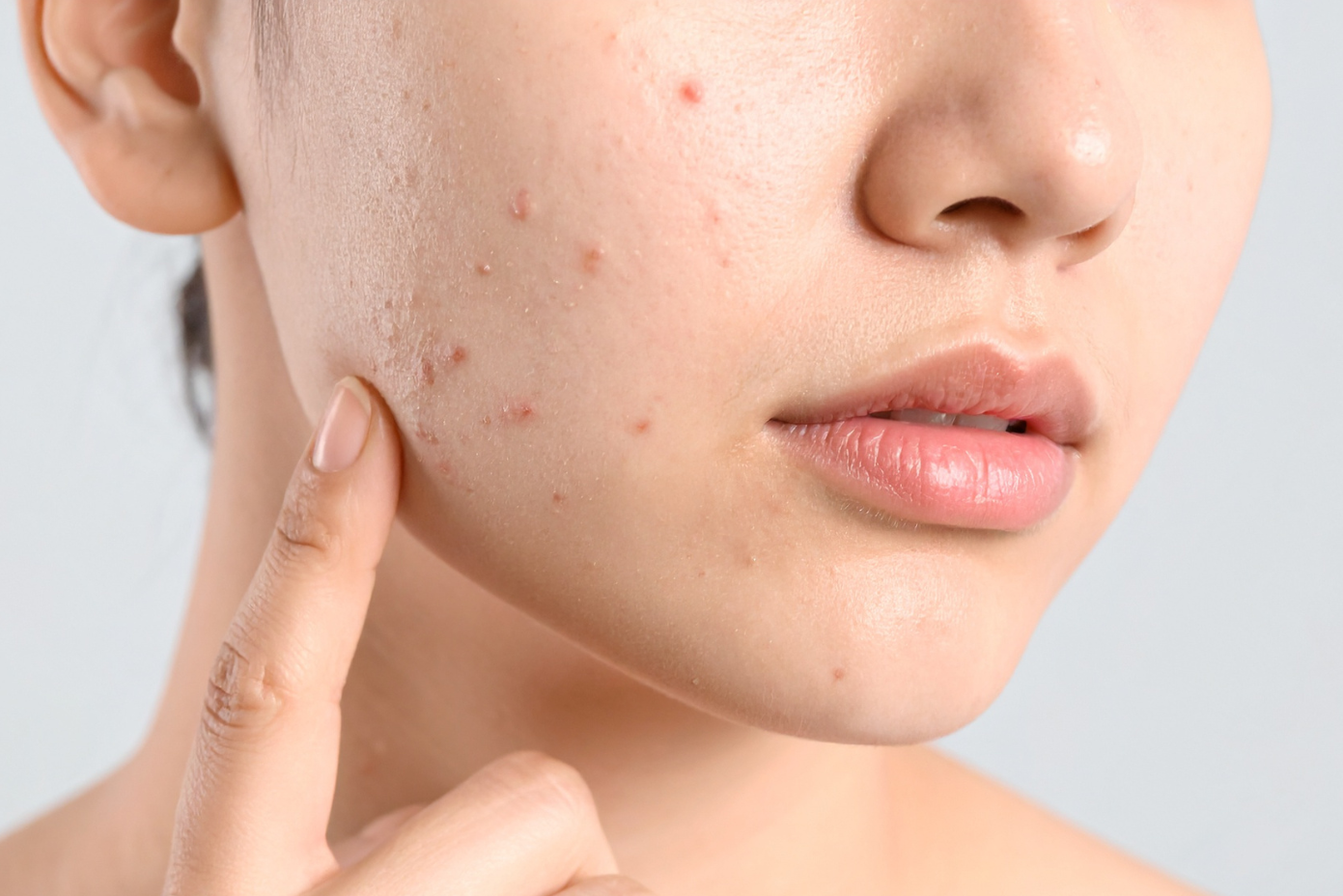
Acne is one of the most common skin conditions that affects not only teenagers, but also adults, especially due to hormonal changes, stress, genetics and improper care.
Increased sebum secretion, clogged pores and inflammatory processes can lead to the appearance of blackheads, papules, pustules and post-acne spots.
Correctly selected care for acne-prone skin helps to balance sebum production, reduce the visibility of irregularities and redness, and support the renewal of the skin barrier, thus reducing the frequency of new acne in the long term without disrupting skin hydration.
Types of acne
Understanding the different types of acne helps in choosing the right treatment.
Enlarged clogged pore
Closed comedones. The pores are clogged with sebum and dead skin cells and are prone to development of an inflammatory process. These changes usually respond well to comedolytics (retinoids).
Black "dots"
Open comedones that look dark due to oxidation. The pores are clogged, but remain open to the air and therefore rarely become inflamed (the C.acnes bacteria are anaerobic). Blackheads and their milder variant (sebaceous filaments) respond excellently to acids - you will see the difference overnight.
Papule
Small, red, inflamed bumps with no visible center. Caused by inflammation and bacterial infection. Papules often occur in rosacea, so a differential diagnosis is necessary. Inflammatory acne is usually not treatable with a "single product" because there are multiple symptoms present, such as compromised barrier function, excess sebum, blockage, and inflammatory processes.
Pustule
Inflamed pimples with a white or yellow pus-filled center. Similar to papules, but with visible pus. Pustules often occur in rosacea and folliculitis (e.g. after shaving), so differential diagnosis is necessary.
Nodule
Large, painful, firm lumps deep under the skin. They can cause scarring and require professional treatment. These types of acne cannot be simply extracted mechanically and often leave scars.
Cystic acne
Large, pus-filled lesions deep under the skin. The most severe form of acne, very painful and extremely prone to scarring.
How Acne Forms: A Guide to Effective Solutions
Which products to choose? Keep in mind that you probably don't need all the products in the categories, but it's enough to choose one cleanser, one treatment and one moisturizer.
Remove excess sebum
Controlling sebum secretion helps reduce pore blockage and comedone formation, which directly affects the frequency and severity of acne. Choose Amphibian Gentle Gel Cleanser (for all skin types) or Clarion Cleanser with 2% salicylic acid for oily, comedone-prone skin.

Skintegra Amphibian
Exceptionally gentle facial cleansing gel

Skintegra Clarion 2% BHA Cleanser
Gel cleanser against clogged pores
Unclog the pores
Keratolytics and comedolytics remove accumulated dead cells that mix with excess sebum, creating a plug that blocks the pore and prevents normal sebum drainage, thus preventing the development of new acne and blemishes. Choose Clarion serum containing AHA+BHA acids or Retiron emulsion, which has a comedolytic effect.

Skintegra Clarion serum
Exfoliating serum for oily to combination skin prone to imperfections

Skintegra Retiron 0.2
This 0.2% retinal emulsion improves the skin’s appearance.

Skintegra ROS/AC 10
Emulsion with 10% azelaic acid
Hydration without occlusion
A preserved skin barrier is essential for acne-prone skin because it prevents moisture loss, reduces irritation and strengthens the skin's resistance to inflammatory processes. Choose formulas that do not clog pores. For very oily skin, prefer Tria Light cream with niacinamide. For combination skin, choose Spectra emulsion with vitamin B12. For normal to dry skin, pick our bestseller cream with Cica and ceramides, Cica-cera.

Skintegra Tria Light
Treatment cream for normal to oily skin prone to irregularities

Skintegra CICA-CERA
Nourishing cream for daily treatment and protective care.

Skintegra Spectra
Neutral emulsion for strengthening the barrier of sensitive and damaged skin
Inflammatory process after acne
The immune system reacts to the presence of bacteria by stimulating an inflammatory response, which leads to redness, swelling and long-lasting marks. It is extremely important not to expose the skin with red marks (erythema) to the UV rays. Protect it with a non-comedogenic sunscreen, and as an additional morning care, you can include an anti-inflammatory serum such as Infrared.

Skintegra Solar II SPF50
Fluid with high SPF 50 and a very high UVA-PF factor (49.1)

Skintegra Infrared
Gentle serum for skin prone to irritation and imperfections
In practice, what does that look like?
See the photo below. If your acne resembles those shown in the photos above, it is a mild to moderate form of acne that in most cases responds very well to properly selected dermocosmetics.
The acne shown in the bottom row represents more severe forms of acne that require medical therapy, with the mandatory use of a mild cleanser and moisturizing cream as the basis of daily care.

Quick guide to acne skin care
Recommended
- Use mild, non-comedogenic products
- Clean your face regularly morning and evening
- Use products with salicylic acid and/or retinoids
- Hydrate the skin with light gel creams
- Protect your skin with SPF every day
Avoid
- Don't pick at pimples and blackheads
- Avoid heavy, greasy creams
- Don't use harsh scrubs and peels every day (including chemical ones)
- Avoid touching your face with dirty hands.
- Don't use too many products at once